

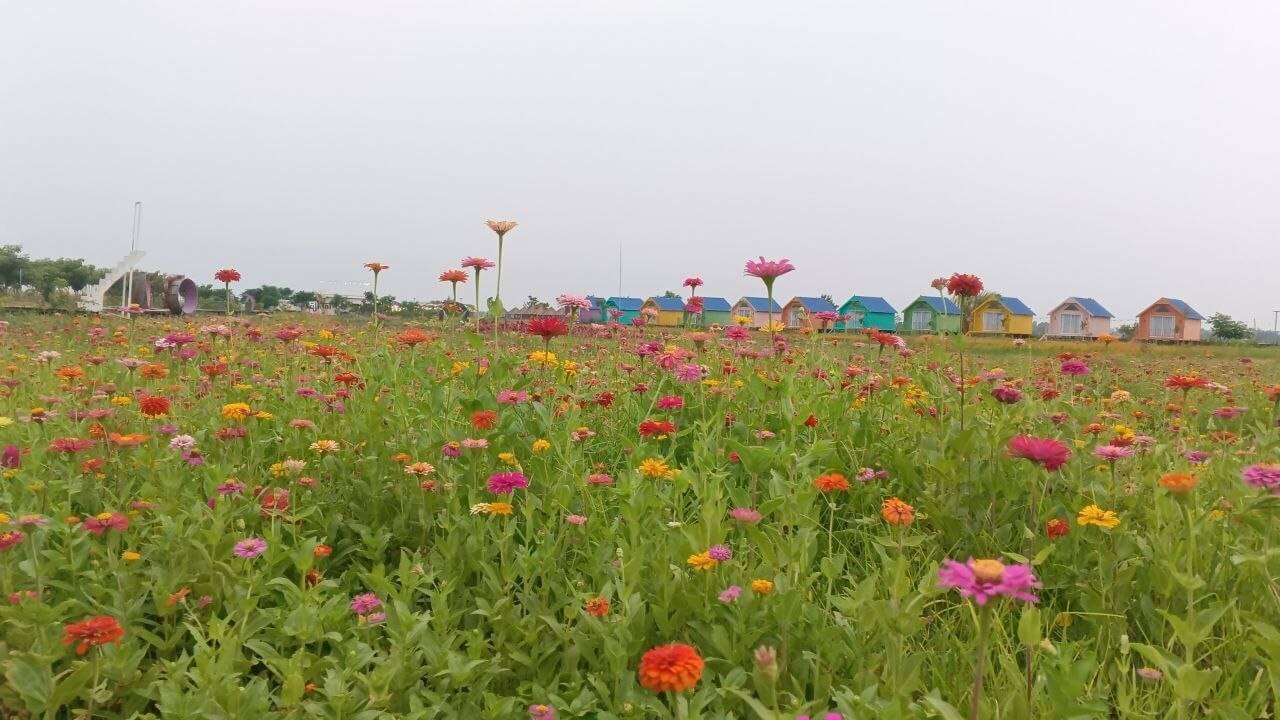
If you’ve ever driven past a colorful flower field charging a $3 to $5 entrance fee, complete with photo-op archways and a line of tourists waiting to get in, you were looking at a flower attraction business in action.
It isn’t a flower farm. It isn’t a flower shop. And it isn’t quite a botanical garden either.
A flower attraction business is an entertainment destination built around a flower field or garden, where tourists pay to visit, stroll, and take photos. It usually layers in additional revenue through glamping accommodations, event hosting, or on-site food and drink.
Sitting at the intersection of agriculture, tourism, and hospitality, it has become one of the fastest-growing small-business models in regions with year-round favorable growing conditions.
I run one of these businesses myself. It’s called Dream Garden. But my first attempt at this model was far from successful. When we were just starting, our results were minimal.
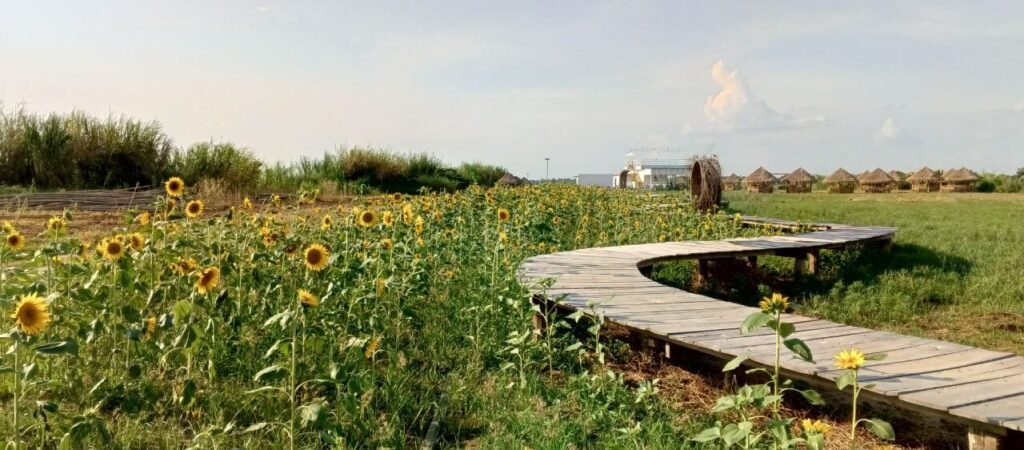
That initial failure is what forced the real question: what exactly is a flower attraction business? After taking notes and working through what had gone wrong, the answer became clear.
We needed to build a true flower tourism destination, not just a field with sunflowers in it. I am sharing this guide so you can learn from my early mistakes and understand the exact mechanics of building a profitable flower destination.
Key Takeaways
- A flower attraction business sells the experience of visiting a flower field, not cut flowers.
- Revenue relies on 4 to 6 combined streams: admission, photography, glamping, events, food, and retail.
- Startup costs vary widely, but lodging margins consistently beat daily ticket sales alone.
- It demands constant physical labor and patience—unlike a one-time landscaping job, a flower attraction is a living, changing entity.
What Exactly Is a Flower Attraction Business?
A flower attraction business is a commercial destination where the flowers themselves are the product. It isn’t about cutting stems to sell to florists.
It’s about selling the experience of walking through the fields, and the revenue comes directly from tourists rather than from wholesale flower sales.
Most successful flower attraction businesses share a few key characteristics:
- Expansive, densely planted fields: Typically, these feature fast-growing annuals like sunflowers, marigolds, celosia, or zinnias. These are chosen for rapid growth, vibrant color, and long blooming periods rather than cut-stem quality.
- Admission tickets: The business relies on a general entry fee rather than a per-stem or per-bouquet charge.
- Photo-ready infrastructure: You will find archways, walkways, color-coordinated zones, and decorative props built specifically to encourage photography and social media sharing.
- Diversified revenue streams: This includes premium photography services, glamping or overnight stays, event hosting, food stalls, or a souvenir shop.
It’s a hybrid of agritourism (think pumpkin patches or lavender farms) and social-media-driven destination marketing. The flowers are the hook that draws visitors in, but the supplementary services are what generate the actual profit.
Flower Attraction vs. Flower Farm vs. Florist vs. Garden Center
These four business models get confused constantly. Here is the model side-by-side to help clarify the distinct differences:
| Business Type | What’s Sold | Primary Customer | Revenue Driver |
| Flower Attraction | An experience or entry ticket | Tourists, photographers, families | Foot traffic, photo fees, add-ons |
| Flower Farm | Cut flowers, bulk stems | Florists, wholesalers, event planners | Volume of stems sold |
| Florist | Arranged bouquets | Individual consumers, event clients | Design markup |
| Garden Center | Plants, tools, supplies | Home gardeners | Retail margin |
A flower attraction business might still sell cut flower bouquets or run a small retail stand on the side. But its core economic driver is tourists buying tickets to walk through the gates, not truckloads of flowers shipped out for wholesale.
That is the definitive line separating an attraction from a farm, even when both grow the same plants.
Revenue Streams: Where the Money Actually Comes From
Most flower attraction businesses run on a combination of four to six integrated revenue streams working together, not one single source of income. Relying entirely on gate fees is a common beginner mistake.
- Admission Fees: This is the baseline stream. It is generally low-margin, but it drives the foot traffic volume necessary for your other streams.
- Premium Photography Services: You can charge extra for exclusive photo spots, prop usage, or costume rentals.
- Overnight Stays (Glamping or Tiny Homes): These carry much higher profit margins than daily admission, which is the main reason many flower gardens expand into camping.
- Event Hosting: Renting out the space for weddings, birthdays, or corporate photoshoots with exclusive after-hours bookings.
- Food and Beverage: On-site stalls or a small cafe often yield the highest profit margin per visitor.
- Retail Sales: Selling fresh bouquets, dried flower products, or souvenirs near the exit.
These are exactly the streams that helped Dream Garden double its revenue and keep the business running to this day.
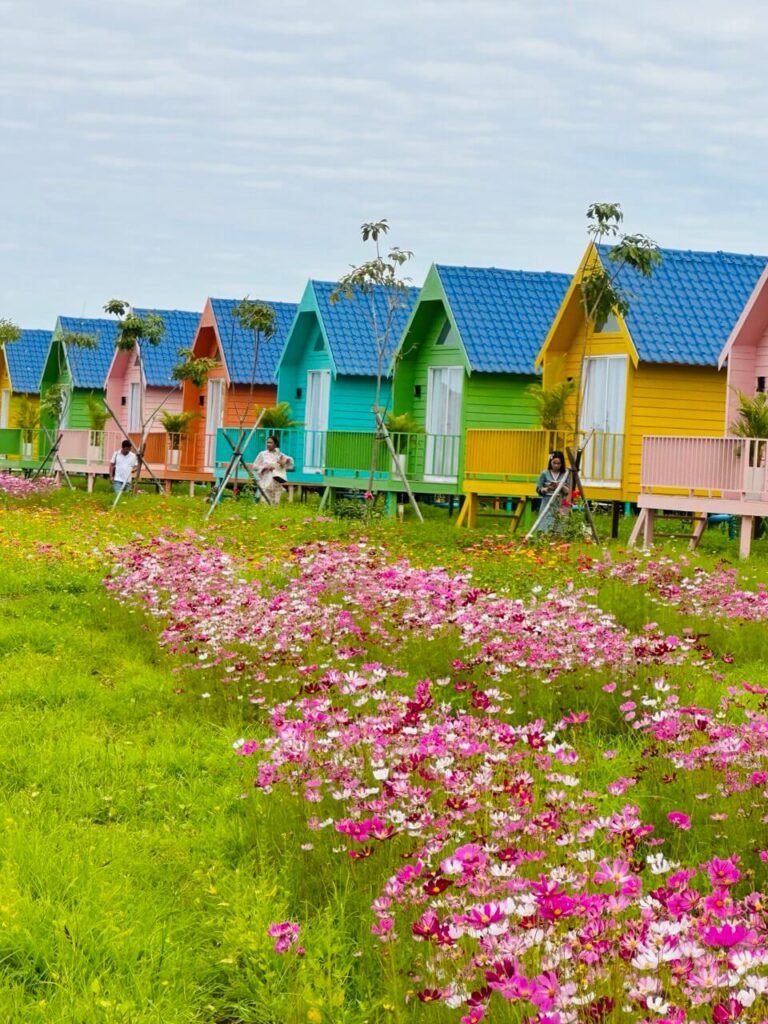
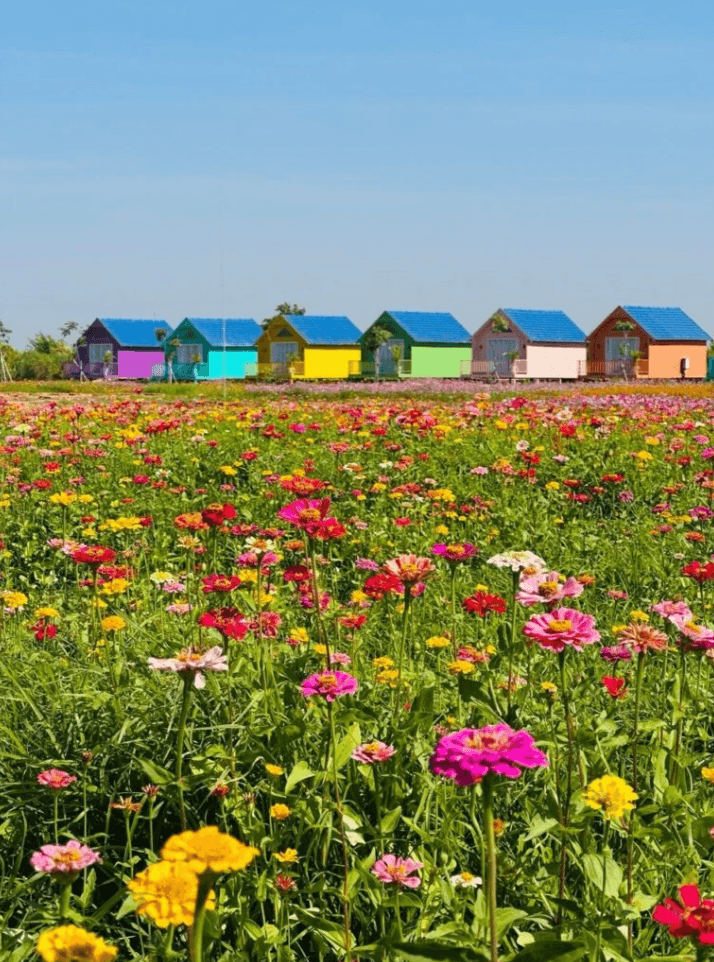
For context, here is how we structure our pricing. Admission is split into two categories: visitors taller than 1 meter pay $3 per person, and children under 1 meter enter free. Guests can stroll through the flower garden and past our rainbow-colored tiny vacation homes, which cost $15 per night to stay in.
Naturally, guests staying overnight need food and drinks too, all of which we cater on-site.
(Note: the $3 admission fee and $15 nightly tiny home rate were promotional prices for our initial launch phase, not permanent pricing).
How to Start a Flower Field Tourist Attraction
Building one of these destinations comes down to mastering four core areas.
1. Land and Flower Selection
A flower attraction business relies heavily on fast-blooming, visually striking seasonal plants. Sunflowers, marigolds, and celosia are popular choices because they bloom quickly and hold their color well.
However, your local climate is the biggest variable. For example, growing sunflowers in a highly humid, tropical region brings entirely different challenges—like rapid root rot or fertilizer burn—than growing the same flowers in a temperate climate.
You must choose flower varieties that thrive in your specific soil and weather conditions, rather than just planting what looks good on the internet.
2. Instagrammable Structures
This is what separates a flower attraction from a regular farm. You need archways, walkways, color-zoned areas, and photo sets. Most of these get built DIY to save on startup costs, using metal arches, painted brick features, wooden pathways, or hanging canopies.
3. Guest Amenities and a Glamping Business
Many flower attractions expand into overnight accommodations once they have a steady flow of daily visitors, since lodging margins run much higher than ticket sales alone.
At Dream Garden, we started with just 5 tents for guests who wanted to stay overnight. But because we operate in a tropical region, the rainy season made tent camping incredibly difficult and uncomfortable for our guests.
The reality of tropical weather. Flooding like this is exactly what pushed us to abandon ground tents and build our raised tiny homes.
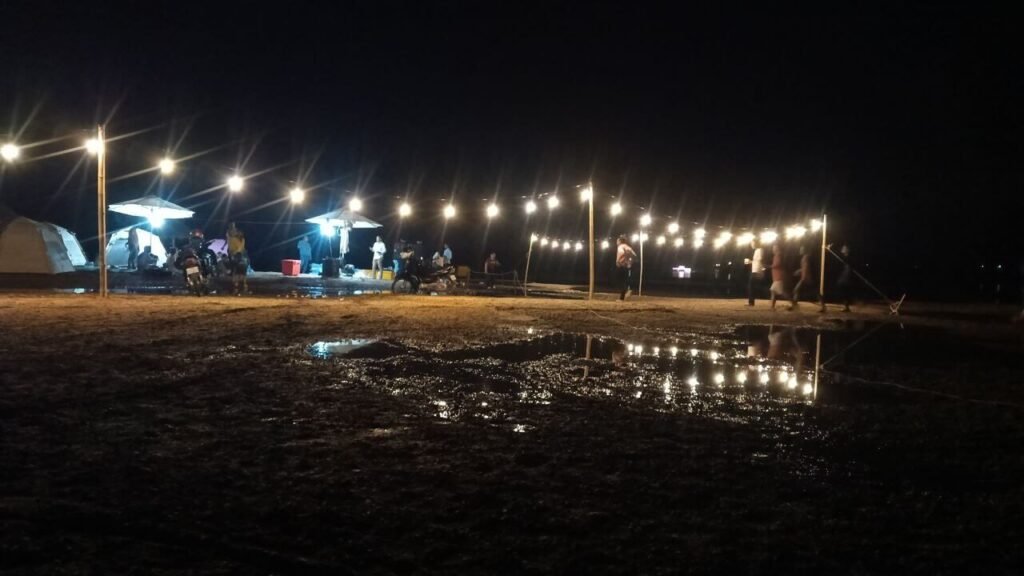
That exact seasonal weather challenge pushed us to adapt. We eventually phased out the canvas tents and built permanent, raised tiny vacation homes instead, protecting our guests from the mud and securing our overnight revenue stream regardless of the weather.
4. Marketing and Customer Acquisition
Because the whole product is a visual spectacle, marketing here runs almost entirely on social proof.
That means user-generated content, location check-ins, and word-of-mouth through guest photos, all backed by targeted paid advertising on platforms like Facebook and Instagram during your peak blooming seasons.
The Real Costs and Time Investment
General business startup guides usually give you a broad estimate: a few thousand dollars for a modestly sized garden, up to substantially more for a fully built-out tourist destination with structures, irrigation, and glamping tents.
The real figure depends heavily on land costs, labor fees, and whether you build it yourself or hire contractors.
As a rule of thumb, expect a large portion of your initial budget to go toward hidden infrastructure—like reliable irrigation systems, leveled pathways, and heavy-duty landscaping tools—rather than just seeds and soil.
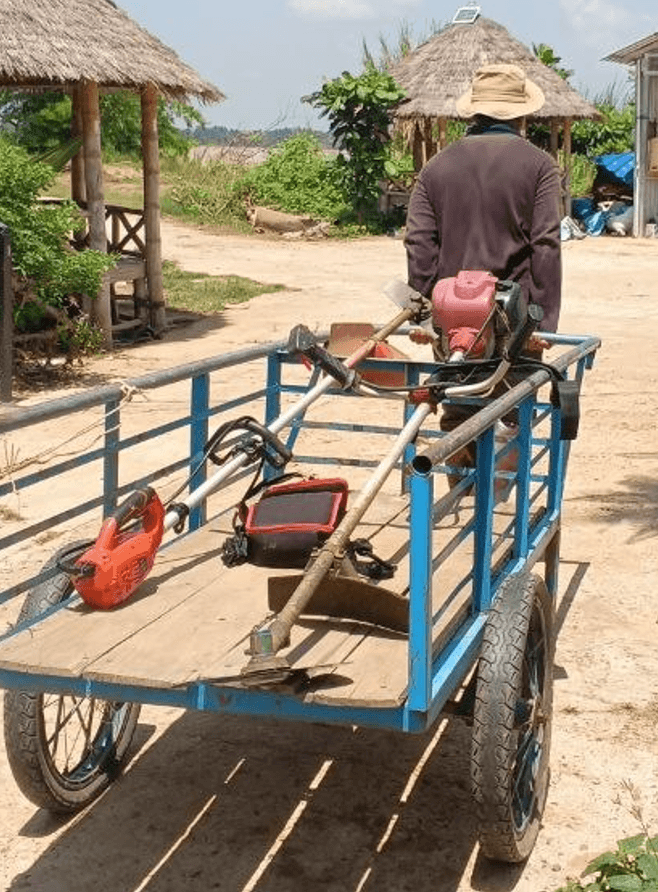
Here is what the journey looked like for us. Back in early 2015, I was a service worker doing yard cleaning, grass cutting, and planting flowers and saplings at people’s houses, working out of a motorcycle trailer with basic tools.
That hands-on experience led to my first attempt at starting Dream Garden in 2019, which ultimately failed. By the time I restarted in 2023 with two partners, the startup cost and potential revenue had tripled compared to 2019, but because of our prior experience, we cut the time it took to build the business in half.
Why Do Flower Attraction Businesses Fail?
The most common failure points in this business model include:
- Launching without market research: Opening the doors before fully understanding local market demand or tourism trends.
- Underestimating ongoing labor: Flower fields need constant weeding, pruning, and replanting. It is a continuous agricultural cycle, not a “set it and forget it” landscaping job.
- Treating it as a seasonal project: Failing to run the business year-round by ignoring seasonal flower rotations or lacking alternative income streams (like food or lodging) during the off-season.
Checklist: Is This Business Right for You?
This model tends to work incredibly well if you have:
- Access to land with a reliable water supply and full sun exposure.
- The willingness to handle direct, exhausting seasonal physical labor.
- Basic social media and marketing skills, since this is a highly visual business.
- High patience for Return on Investment (ROI), which is slower than service businesses like lawn care.
- A location that is relatively easy to reach by car from major towns or cities.
Conversely, it gets severely challenging if you only have a short-term land lease, unreliable water for irrigation, or you simply are not prepared for the cycle of constant replanting.
Final Thoughts
A flower attraction business isn’t a flower farm with a gate bolted onto it—it’s its own unique model, built more like a small hospitality business than a traditional garden center. It rewards people who are comfortable with visible failure, visible rebuilding, and constant physical iteration.
If you can master the balance between the agriculture of the flowers and the hospitality of the guests, it is an incredibly rewarding business to grow.
Frequently Asked Questions
Is a flower attraction business profitable?
Profitability depends on how many revenue streams you combine. Admission fees alone are low margin, but layering in glamping, food and beverage, event hosting, and retail (the same 4 to 6 streams most flower attractions run) is what typically drives real profit, since lodging and food margins run higher than ticket sales alone.
How much does it cost to start a flower attraction business?
Costs range from a few thousand dollars for a modest garden to significantly more for a full build-out with structures, irrigation, and glamping accommodations. The exact number depends on land costs, labor, and whether you build it yourself or hire contractors.
What flowers work best for a flower field tourist attraction?
Fast-blooming, colorful annuals tend to work best: sunflowers, marigolds, celosia, and zinnias, chosen for rapid growth and long blooming periods rather than cut-stem quality.
How is a flower attraction business different from a flower farm?
A flower farm sells cut stems in bulk to florists and wholesalers. A flower attraction business sells the experience itself, an entry ticket to walk through the field, with revenue coming from tourists rather than wholesale flower sales.
What usually causes a flower attraction business to shut down?
The most common reasons are launching before understanding real market demand, underestimating the ongoing labor flower fields require, and treating the business as seasonal instead of running it year-round with rotating blooms.
