


If you have spent months, or even years, dreaming of starting a gardening or landscaping business, yet still feel stuck without fully understanding why, this is for you.
Before you read another generic “5 tips to overcome fear” article, let me tell you how to overcome fear of failure before starting a gardening business the way I actually learned it: fear is not the problem. What you do with it is the problem.
I know this because I lived it. I spent nearly a year completely inactive before finally deciding to launch Dream Garden. It was not a lack of know-how.
I had already built and closed a landscaping business before this one. Yet I still hesitated.
Key Takeaways
- Fear of failure often hides behind “productive” research, not obvious panic.
- Waiting for the perfect time doesn’t lower risk; it just shifts it into drained savings and competitors filling the gap.
- A hard launch date turns “someday” into a decision you either hit or miss.
- Even a business that later fails can teach more than the launch itself.
The Real Reason You Feel Stuck (Not Fear Itself)
When starting a gardening business, the fear of failure rarely announces itself as “I’m afraid.” Instead, it disguises itself as productivity.
You research. You compare equipment prices. You read about other people’s businesses. You convince yourself that you are just being cautious, thorough, and responsible.
This paralysis is far more common than most people admit. A 2021 Harris Poll revealed that 92% of people who seriously consider starting a business never actually do, with fear being the primary culprit.
Most of that 92% likely would not describe themselves as afraid. They simply believed they were not ready yet.
Signs You’re Stuck in the Research Phase
If any of this sounds familiar, you may already be stuck in the research loop:
- You keep comparing prices and options instead of buying or booking anything.
- You read about other people’s gardening or landscaping businesses more than you work on your own.
- You tell yourself you are being cautious, thorough, or responsible, but weeks pass with nothing to show for it.
- You feel busy, but nothing has actually moved forward.
I remember taking a five-day family trip to Preah Sihanouk province before I launched my business. I visited a remarkably simple beachside spot that was thriving.
Sitting in a basic chair under a standard umbrella, watching the sunset and listening to the waves, I thought to myself: they just have a simple chair and an umbrella, yet they are fully operational. Why am I waiting until I have everything? Why am I waiting for the perfect time?

That was my wake-up call. Research feels productive, but it is completely useless if it never translates into tangible action.
Why Waiting for the Perfect Time to Start a Business Is Risky
It took me far too long to understand this crucial point: waiting does not mitigate risk. It merely shifts the risk to blind spots. Competitors fill the market gaps, your savings quietly drain, and your original, exciting business idea slowly loses its spark.
About six months later, I returned to that exact spot in Preah Sihanouk. This time, I felt the sting of a massive missed opportunity. A row of small, bustling waterside huts had replaced the simple chairs and umbrellas.
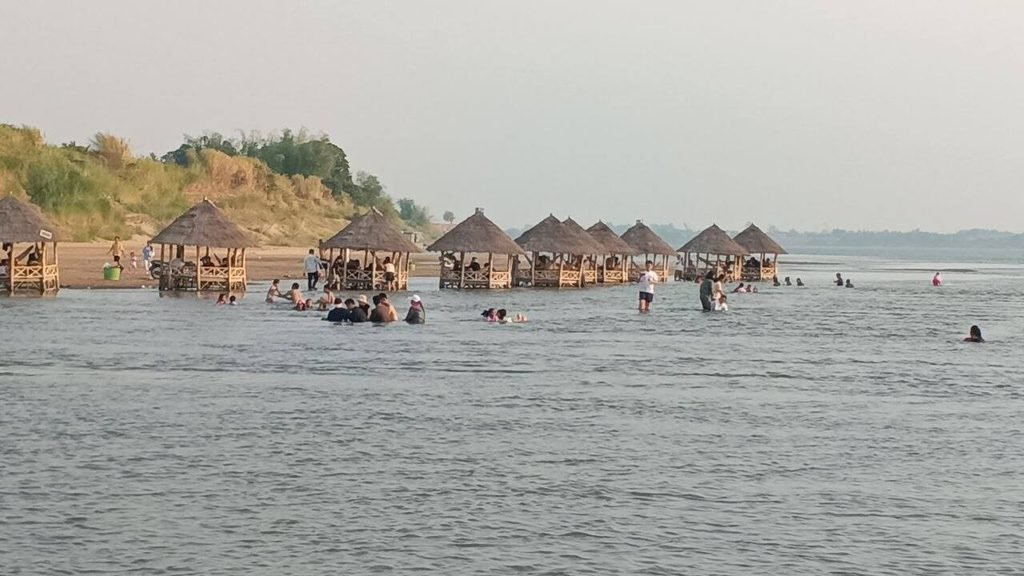
While they upgraded and expanded, my six months had passed with absolutely nothing to show for it. My bank account was slowly depleting without a purpose.
I used to tell myself I was preparing. In reality, my weeks were on a loop: read industry articles, daydream about Dream Garden, shut my laptop, and do absolutely nothing to move the business forward.
The True Cost of Stagnation
By the time I finally launched Dream Garden in mid-2019, nearly two years had passed since the idea first took root in my mind.
Those two years were not a planning phase. That was a fully viable business sitting unlaunched, costing me time I can never reclaim, all while I told myself I was still getting ready.
The Moment I Finally Pushed Past the Fear
Something had to break the cycle. For me, it was not a sudden, magical surge of confidence. It was a specific, decisive moment.
Returning from that second beach trip, I promised myself I was done reading, done researching, and done being afraid. I decided that fear no longer had the authority to make my choices.
I began immediately with whatever basic materials I had. I did not draft paper blueprints. I went straight to the dirt at Dream Garden. Using a stick, I traced a star shape directly into the earth.
I began stacking leftover bricks vertically along the outline, then repurposed discarded paint cans to form a central circle for the flowers.
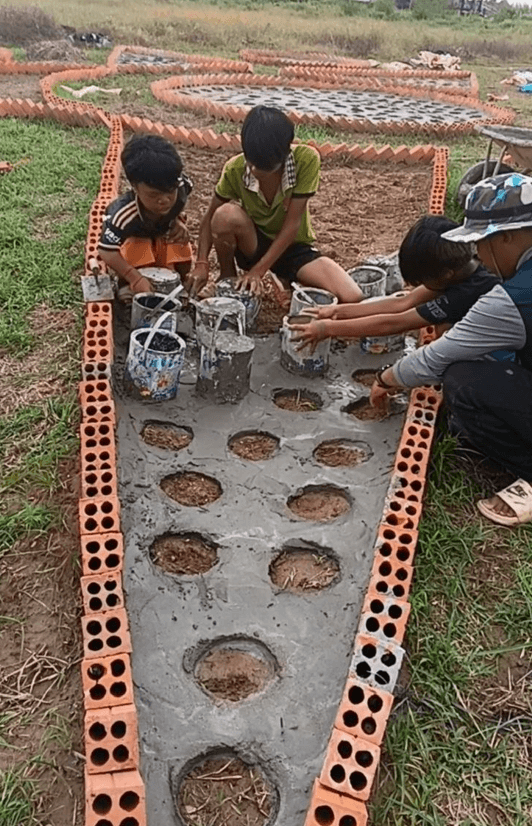
Look at the results just two months later. Built with the most basic tools imaginable, it looks incredibly attractive. It was completely different from everything I had over-researched and over-planned.

Whatever that breakthrough moment looks like for you, it will likely be smaller and less dramatic than you expect. It rarely sounds like “I am no longer afraid.” It sounds much more like: I have decided fear no longer gets to decide for me.
Practical Methods to Overcome Fear of Failure
If you are stuck in the “still researching” phase, you do not need motivation. You need structure. Here is how to force yourself forward.
Set a Hard Launch Date
Do not set a “when I’m ready” date. Ready is an emotion, not a milestone. A calendar date is a binary commitment: you either hit it or you miss it.
Separate Fear of Failure vs. Fear of Judgment
Ask yourself what is truly holding you back. Are you worried the business will not work, or are you terrified of what people will think if it fails? These are two different fears, and they call for two different answers.
Talk to Someone Already in the Industry
Speak to an active gardening or landscaping business owner. Do not ask for permission. Ask for hard data. Fear breeds in the absence of facts.
Calculate Your Actual Worst-Case Scenario
Define your financial and practical rock bottom. What actually happens if it does not work? For most low-overhead, small-scale startups, failure is highly recoverable.
Start Smaller Than You Think You Must
You do not need massive capital or a flawless plan for step one. If capital is your excuse, my guide on How to Start a Gardening Business With No Money can help turn research into your first paying client.
Quick Recap
- Set a hard launch date instead of a “when I’m ready” date.
- Separate fear of failure from fear of judgment.
- Talk to someone already running a gardening or landscaping business.
- Calculate your actual worst-case scenario.
- Start smaller than you think you must.
What to Do When a Small Business Fails
Launching Dream Garden did not mean the lessons ended. It meant a new syllabus began. Overcoming the initial fear of starting was merely the first hurdle.
The truth is, the business I launched eventually failed two years later, and the process of rebuilding it taught me infinitely more than starting it ever did.
If you are still deciding, know this: the fear does not magically vanish the day you launch. But it gets a little bit quieter with every real, tangible decision you make.
Final Thoughts
Learning how to overcome fear of failure before starting a gardening business is not about waiting until the fear disappears.
It is about setting a date, gathering real data instead of endless research, and accepting that even a failed first attempt can become the foundation for a stronger second one.
Frequently Asked Questions
Is it normal to feel scared before starting a gardening business?
Yes. A 2021 Harris Poll found that 92% of people who seriously consider starting a business never actually do, and fear is the primary reason. Most would not even call it fear. They would call it “not being ready yet.”
How can I tell if I’m actually stuck instead of just being cautious?
Watch for the pattern, not the feeling. If you are comparing prices, reading about other people’s businesses, and calling it responsibility while weeks or months pass with nothing launched, you are stuck in research, not preparation.
Does delaying a business launch actually reduce risk?
No. Waiting shifts the risk instead of removing it. Competitors fill the gap, savings drain quietly, and the original idea loses its spark, which is exactly what happened when simple beach chairs were replaced by a row of built out huts within six months.
Do I need a lot of money or a perfect plan before I start?
No. A hard launch date and basic materials are enough to begin. The first version of Dream Garden was a star shape traced in dirt with a stick, outlined in leftover bricks, and centered with repurposed paint cans, and it looked attractive within two months.
What happens if the business fails after I finally launch it?
It can still fail, and that is not the end of the lesson. Dream Garden failed two years after launch, and rebuilding it taught far more than the original launch did.
