

When we started organizing our flower garden into distinct sections, most notably the “Paradise Bridge,” we successfully marketed the space and began attracting a steady, daily stream of visitors to Dream Garden.
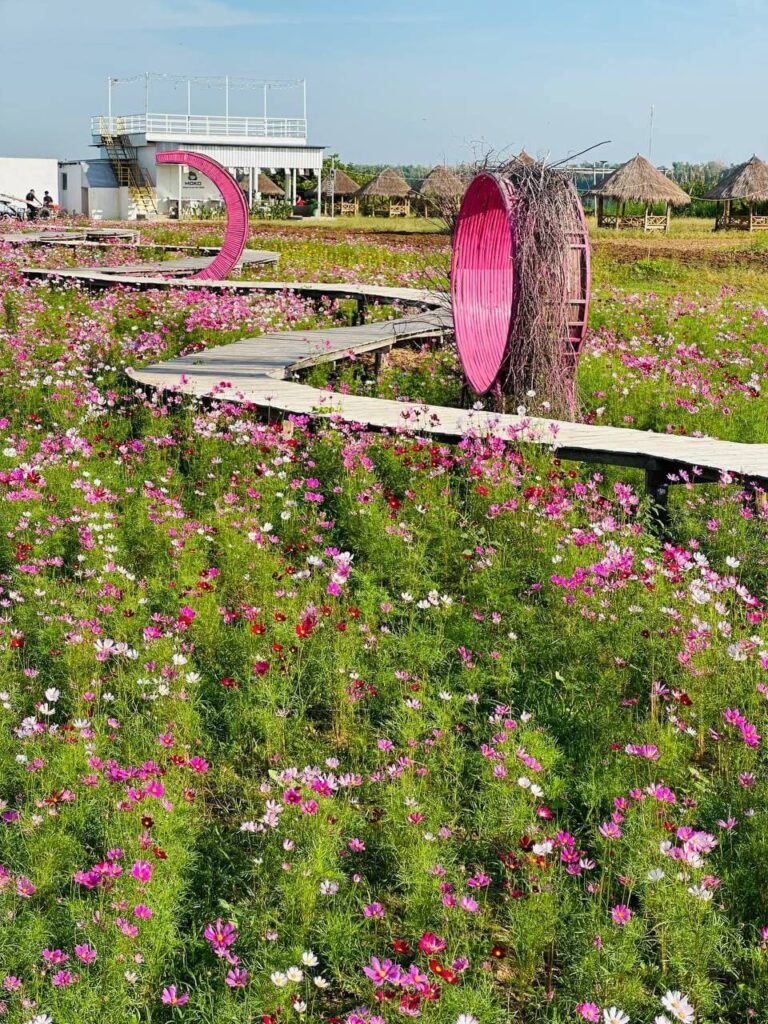
But because we’re located in a tropical region, the rainy season brought frequent downpours that disrupted our guests’ sightseeing again and again.
That problem is what led us to build a DIY hanging umbrella canopy, a rainbow-colored, bamboo-framed shelter that now protects visitors from sudden rain and doubles as one of our most photographed attractions.
Here’s exactly how our team built it, step by step, using locally sourced materials.
Key Takeaways
- We built a DIY hanging umbrella canopy from bamboo poles, wire, and modified umbrellas to shelter visitors during tropical rainy season downpours.
- Drilling a hole through each umbrella handle let us thread wire hooks for a stable upside-down hang that doesn’t blow away in the wind.
- We successfully installed the canopy in 6 locations across Dream Garden.
- The finished canopy doubles as a highly photogenic, rainbow-colored backdrop for our guests.
The Rainy Season Problem Behind This Hanging Umbrella Installation
After noticing how often the rain disrupted visits, we urgently looked for a fix. The main problem was that most visitors didn’t bring their own umbrellas.
Assigning a staff member to stand in the rain and hand out umbrellas was highly inefficient, and it still didn’t solve the real issue.
It was also cumbersome for visitors to hold an umbrella in one hand while trying to hold their phones to take pictures with the other. It simply looked chaotic and awkward, especially in a garden built around photo-worthy spots.
Following a team discussion, we found our solution. Creating a memorable experience for garden visitors doesn’t always require a massive construction budget or expensive contractors.
Sometimes the most eye-catching attractions can be built using simple materials, a little teamwork, and a lot of creativity.
This hanging umbrella installation for rainy season protection turned out to be an elegant, highly practical, and cost-effective answer for Dream Garden, and you can adapt this same project for your own garden business or backyard.
Materials and Tools for a DIY Hanging Umbrella Canopy
Before you begin, gather your materials. By sourcing these items locally, we kept our costs to an absolute minimum:
- Rainbow umbrellas: Calculate the exact quantity you need based on the length of your walkway.
- Sturdy bamboo poles: Used to construct the main load-bearing support frame.
- Heavy-duty wire or steel cable: You’ll bend this into hooks to securely attach and hang the umbrellas from the main frame.
- Power drill and small drill bits: Essential for modifying the umbrella handles.
- Zip ties and metal cable clamps (U-bolts): To tightly secure the ends of the wire cables.
- A sturdy ladder: For safe installation at elevated heights.
Step-by-Step: Building Our Bamboo Umbrella Canopy Frame
Step 1: How to Hang Umbrellas Upside Down Without Them Falling
Standard umbrellas are designed to be held upright, not hung upside down from a wire. If you simply tie a string around the handle, the umbrella will slide back and forth in the wind or fall completely.
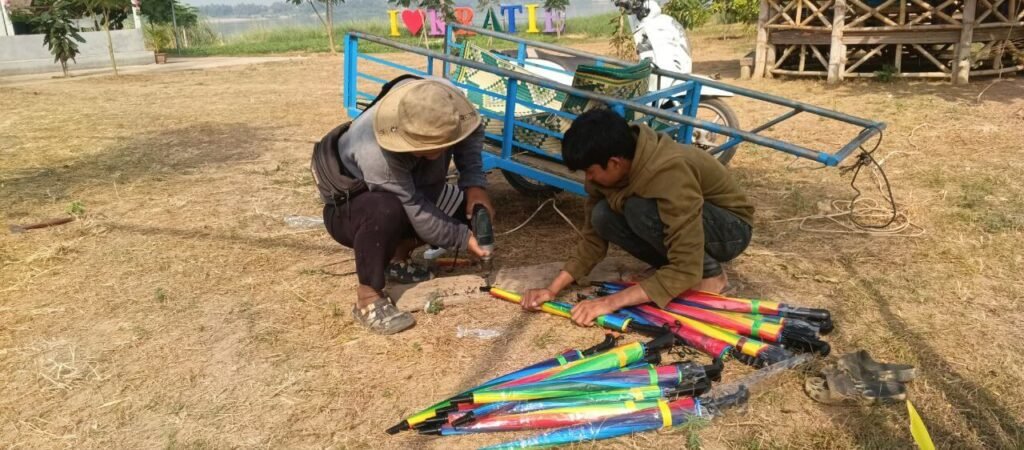
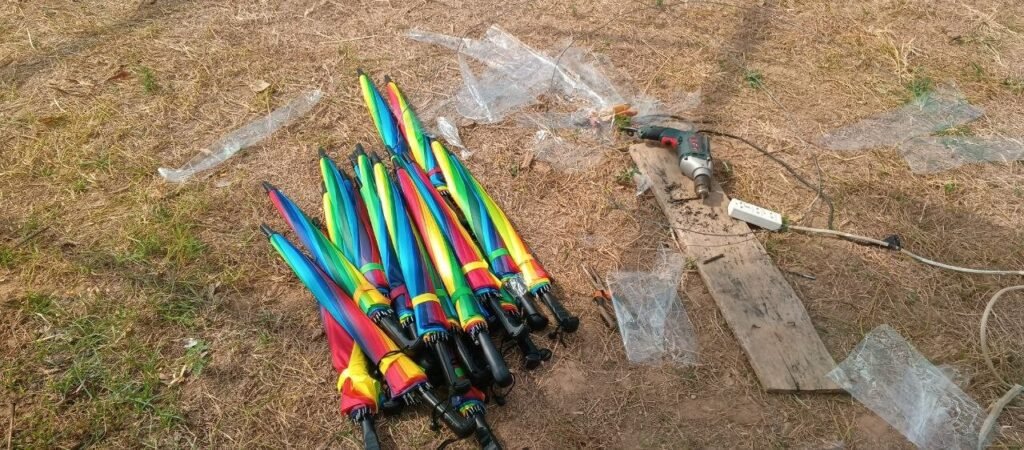
To solve this, our team used a power drill to make a clean, straight hole right through the base of each plastic umbrella handle.
This modification let us thread our custom wire hooks directly through the handle itself, which guarantees stability, keeps the umbrellas firmly in place, and lets visitors easily grab one just by twisting it a half turn and pushing up.
Step 2: Frame Installation and Preparation
Next, we constructed the main support frame. To keep a rustic, natural aesthetic that blends with the garden environment, we used large, heavy-duty bamboo poles planted firmly into the ground.
To ensure the bamboo poles wouldn’t blow over during a heavy storm, we dug holes deep enough to anchor them securely. We set the thickest bamboo poles into these holes, packing the earth tightly around the base to prevent any shifting.
Once the vertical bamboo poles and the top horizontal bamboo bars were securely tied and structurally sound, we laid all the newly drilled umbrellas out on the ground. This let us arrange the colors into a beautiful rainbow pattern before hanging them up.
Step 3: How to Attach Umbrellas to a Wire Cable
Once the frame was solid, it was time for the main event. We pulled our heavy-duty wire tightly across the top horizontal bamboo bars.
Working carefully from a ladder, we threaded the wire structures through the holes we drilled in Step 1, hanging the umbrellas securely above the walkway.
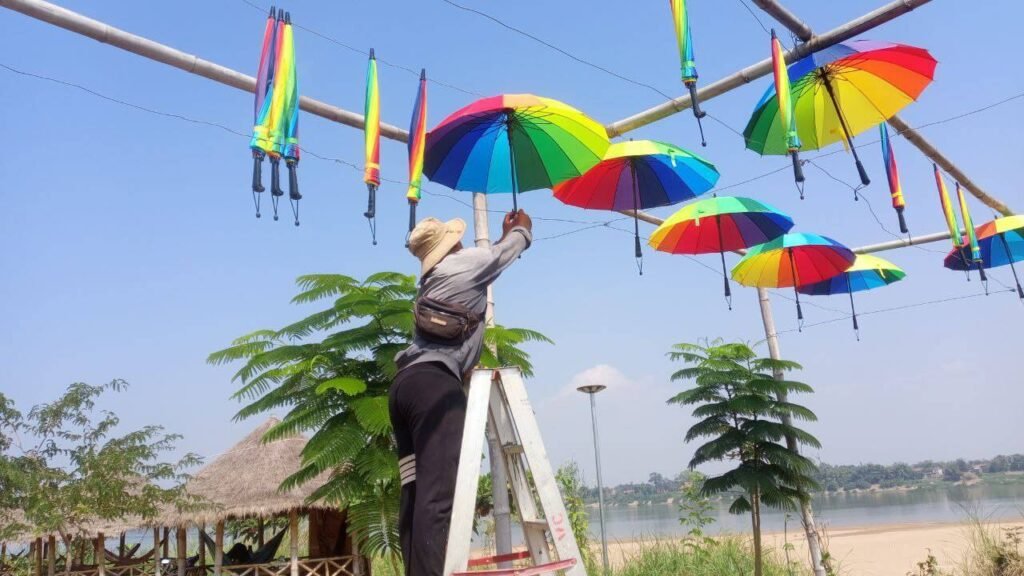
To keep even spacing and stop the umbrellas from bunching up in the wind, the bent wire hooks hold each umbrella in its own spot, while still letting guests easily detach one when they need it.
Step 4: Final Adjustments for Maximum Appeal
Once every umbrella was hung, we opened them fully and made final adjustments to the tension of the main wire. The goal is to pull the wire as taut as possible so it doesn’t sag under the weight of the umbrellas.
To achieve this, we looped the ends of the heavy-duty wire around the outer bamboo posts and secured them tightly.
While zip ties are great for quick, temporary fixes, we highly recommend using heavy-duty metal cable clamps for long-term tension and durability against outdoor weather.
Location and Signage Along Our Garden Walkway
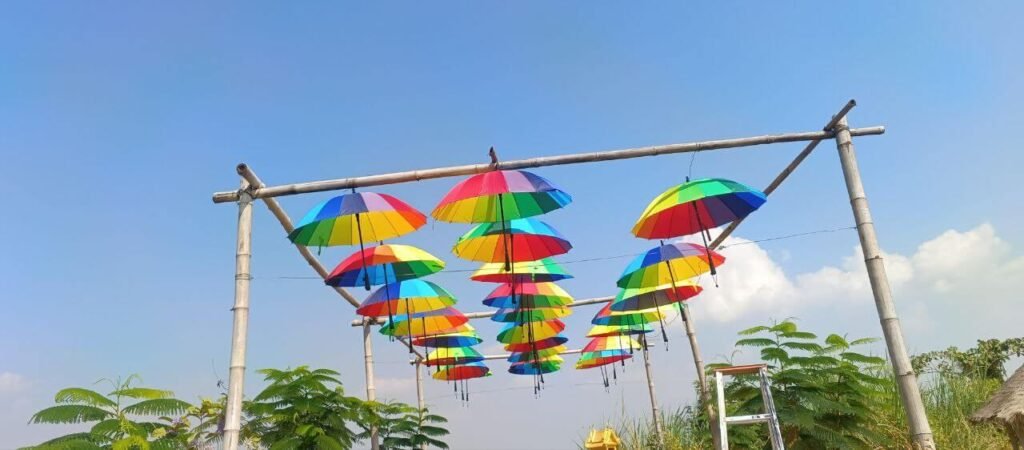
Because Dream Garden covers a vast space divided into distinct zones, we installed this umbrella canopy for garden walkway coverage in 6 different locations.
To let customers know these rainbow umbrellas are actually available to use during sudden rain or extreme heat, we placed a wooden sign that reads:
“Rain or shine, I am always here to protect you. Just please don’t forget to leave me at the exit.”
The Result: A Rainbow Umbrella Ceiling for Garden Visitors
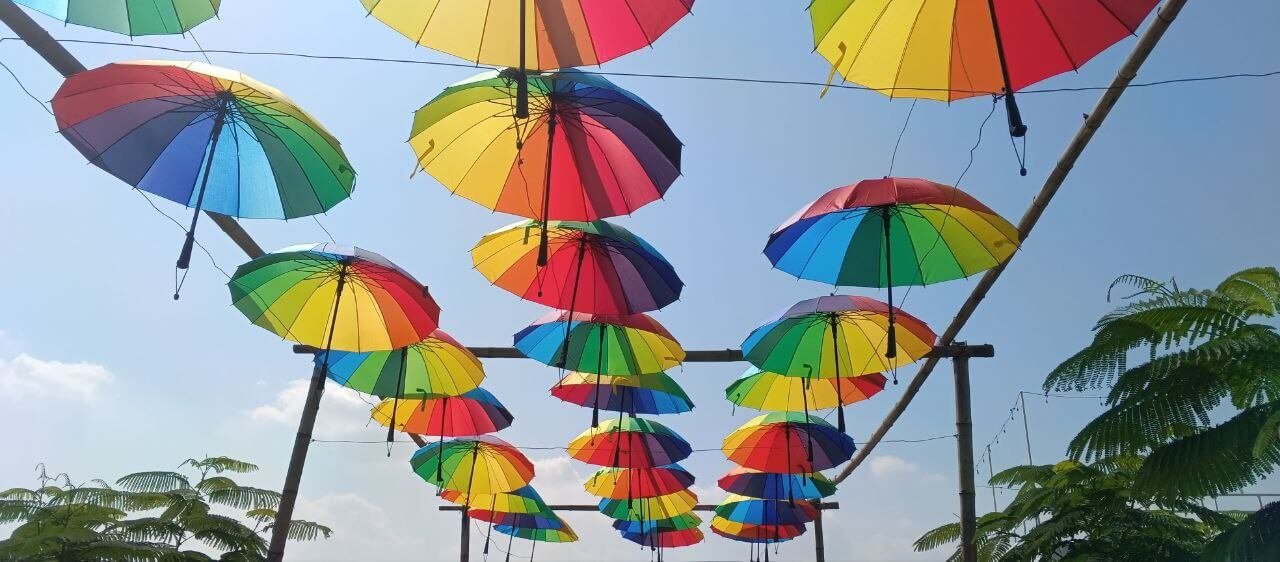
The finished view from below is a vibrant, elegant canopy that instantly captures the eye and diffuses the sunlight, creating what turned out to be the perfect lighting for photography.
The contrast between the vivid rainbow colors, the natural texture of the bamboo, and the bright blue sky creates an immediate aesthetic charm for anyone strolling through the garden.
Could You Build a DIY Hanging Umbrella Canopy for Your Own Garden Business?
Building an installation like this proves that with just a little manual labor and some clever problem-solving, you can elevate the aesthetics of your garden without breaking the bank.
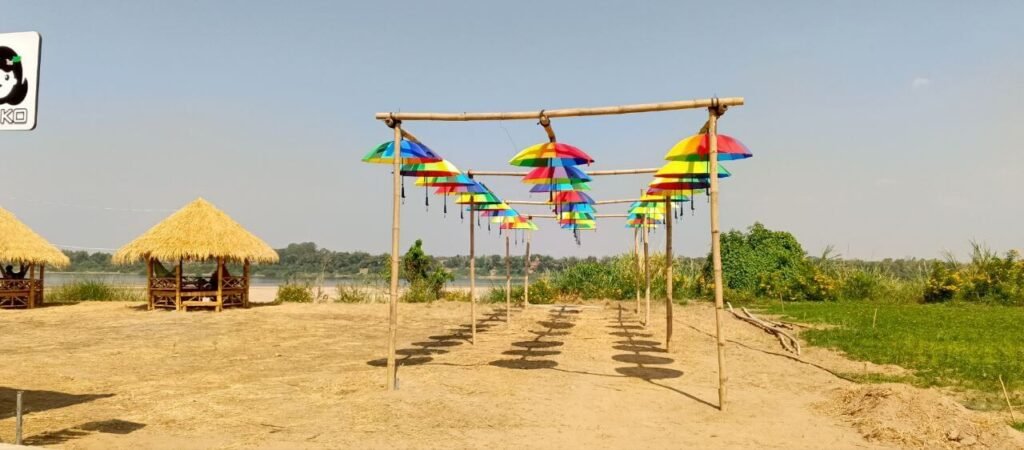
If you’re running a garden business, managing an outdoor event venue, or just want a standout backyard feature, this project is one you can realistically adapt with local materials and a small team.
Frequently Asked Questions
How do you stop hanging umbrellas from spinning or falling in the wind?
We drilled a hole through the base of each umbrella handle and threaded a wire hook through it, then pulled the main wire as tight as possible. That combination keeps each umbrella locked in its spot instead of sliding or spinning loose.
What materials do you need to build an umbrella canopy?
You need rainbow umbrellas, sturdy bamboo poles, heavy duty wire or steel cable, a power drill with small bits, zip ties or cable clamps, and a sturdy ladder for installation.
Why build the umbrella canopy instead of a standard shade structure?
It doesn’t require a big construction budget or contractors, it can be built with simple local materials and a small team, and it doubles as a colorful photo attraction, not just shelter.
How many umbrella canopy installations does Dream Garden have?
We installed the canopy in 6 different locations across the garden, since the space is divided into distinct zones.
Can this DIY umbrella canopy handle sudden rain or extreme heat?
Yes. We put up signage specifically letting visitors know the umbrellas are available for use during sudden rain or extreme heat, not just for decoration.
