

A flower attraction business does not fail simply because flowers stop growing. It fails when the landscape turns desolate during months that should be vibrant, and visitor numbers drop before anyone spots the real problem.
Learning how to keep a flower attraction blooming year-round in a tropical climate became our top priority the moment we saw this happen.
By mid-March 2024, right in the middle of our peak dry season in Asia, guest attendance at Dream Garden had unexpectedly dropped by 2.8% compared to previous reports.
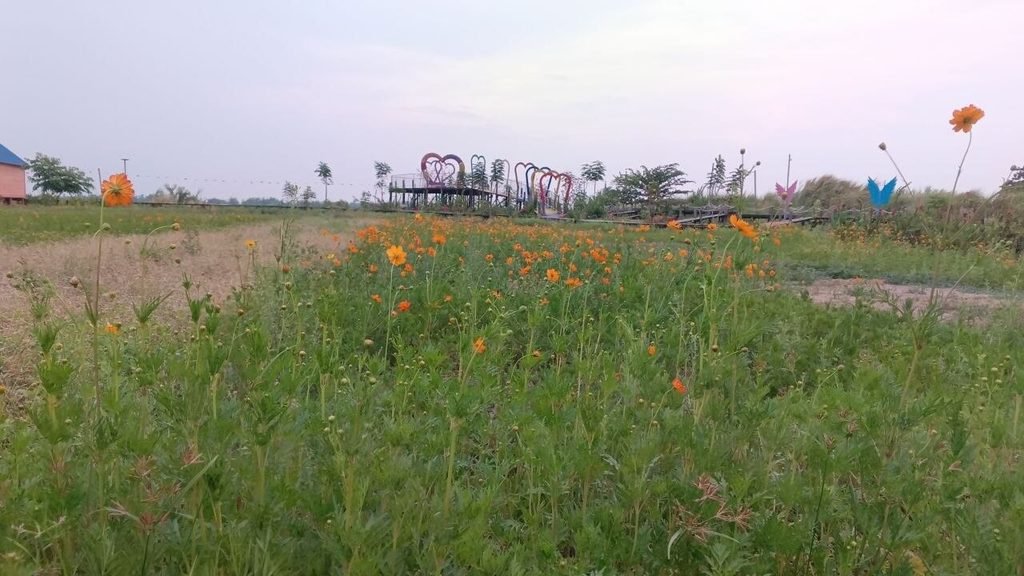
Dismayed, I climbed up to our elevated Paradise Bridge to inspect the whole property. The answer was painfully obvious. Large sections of the landscape were entirely bare, and older blooms had completely died off. This visual gap was our wake-up call.
We had to fix it immediately, not just to patch one bad month, but to keep the attraction blooming every single month rather than relying on peak season alone.
Key Takeaways
- The Revenue Threat: A 2.8% dip in visitor attendance exposed bare, dead patches across our flower fields during the dry season.
- The Core Mistake: Planting a single variety across one large area was our biggest early oversight.
- The Solution: A staggered planting schedule across zones, paired with separate dry-season and wet-season calendars, brought visitor numbers back within four months.
Why Seasonal Blooming Is a Business Problem
For a casual home garden, a few weeks without blossoms goes largely unnoticed. Nobody is buying a ticket to see it.
For a tropical climate flower business, that same gap means disappointing photos, unhappy guests, and a direct hit to the experience you are actively selling.
You cannot rely on casual gardening advice that treats a dormant month as acceptable, because your guests are not casual visitors to your own backyard. They are paying customers who planned a trip around seeing color.
When you charge daily admission, continuous vibrancy is not a nice touch. It is mandatory.
Overcoming Early Rotational Mistakes
Initially, we assumed we had a solid plan. Small oversights created massive gaps. Our biggest mistake was planting a single flower variety across too large an area.
We also miscalculated the specific lifespans of different floral species: how long each one takes to grow, hit peak bloom, and then decay.
Failing to time replanting around those lifespans leaves you with sparse, underwhelming fields exactly when guests expect the opposite.
The Mindset Shift: Treating Planting as a Continuous Rotation
Our region also dictates two extreme seasons: heavy monsoon rain and scorching dry heat. That reality forced us to stop treating planting as a one-time event and start treating it as a continuous, strategic rotation.
Mastering a Staggered Planting Schedule for Continuous Flower Blooms
The varieties that work best for our resort—sunflowers, marigolds, celosia, zinnias, and cosmos—grow fast and hold brilliant color. The trade-off is that fast bloomers fade just as quickly. A single planting round only buys a few weeks of beauty.
A staggered planting schedule for continuous flower blooms solves that trade-off. We plant across different zones on a rotation, so as one section fades, another hits peak bloom right beside it.
You can see this in practice in the rows of fresh cosmos and zinnia seedlings below, planted in staggered bands so the color never breaks all at once.
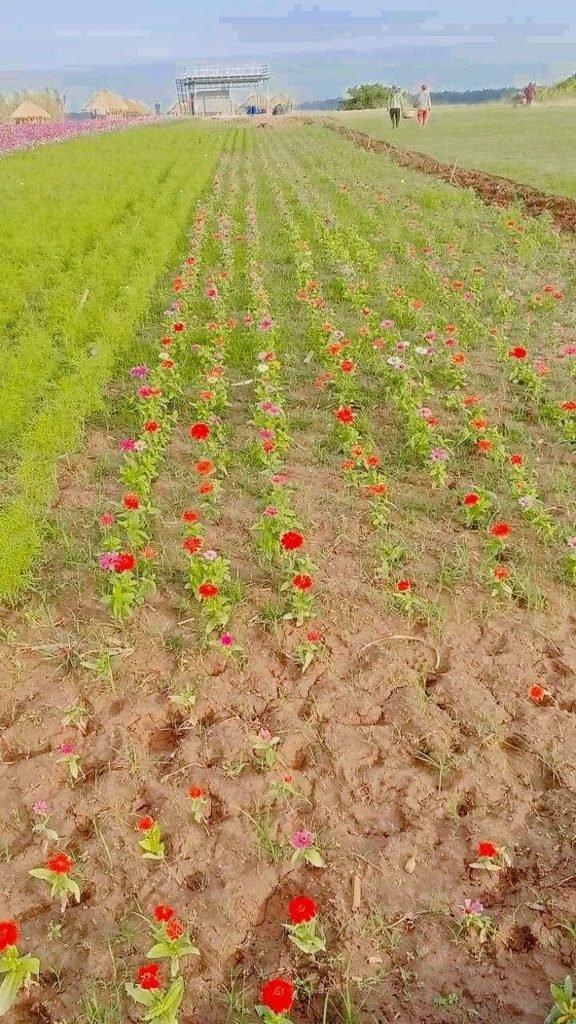
Walk the property on any given week, and you will find one zone still at seedling stage, dark soil showing between the rows, right next to a neighboring zone already at full color in magenta, pink, and gold. That contrast is the whole point.
It means a fading section is never left on its own for guests to notice. By rotating local and imported seeds and mapping out exact care schedules for each zone, guests never see the transition.
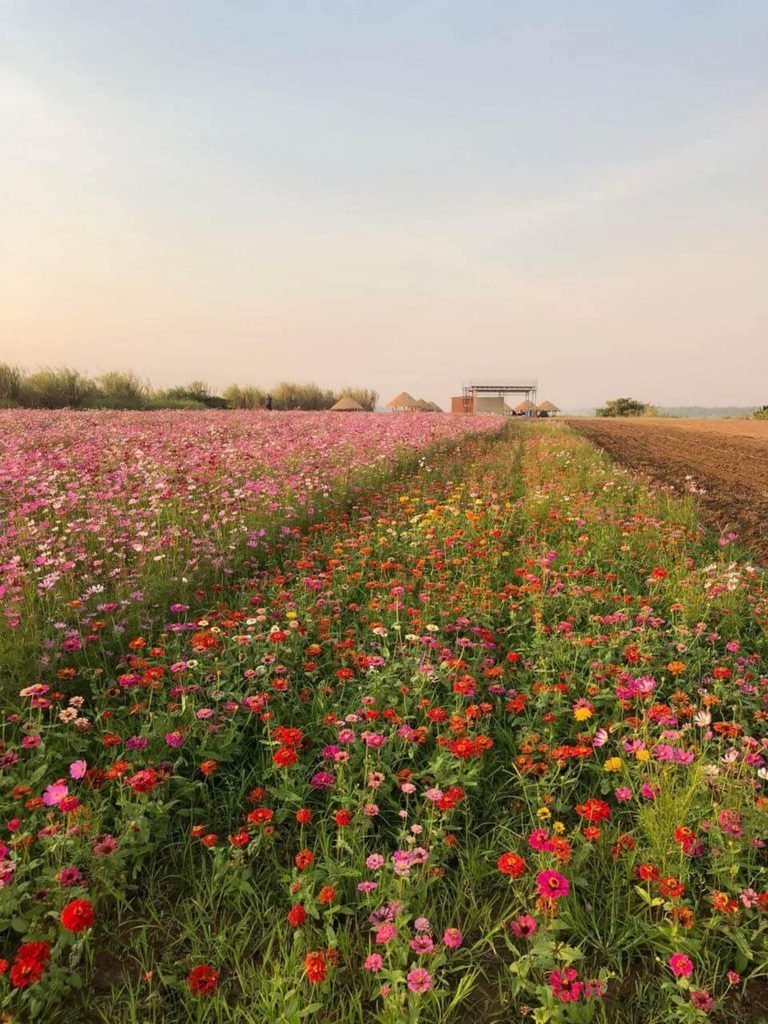
They only experience waves of color moving across the property, whether they are standing on the elevated Paradise Bridge with its line of heart-shaped sculptures or walking the wooden boardwalk that runs straight through the sunflower zone.
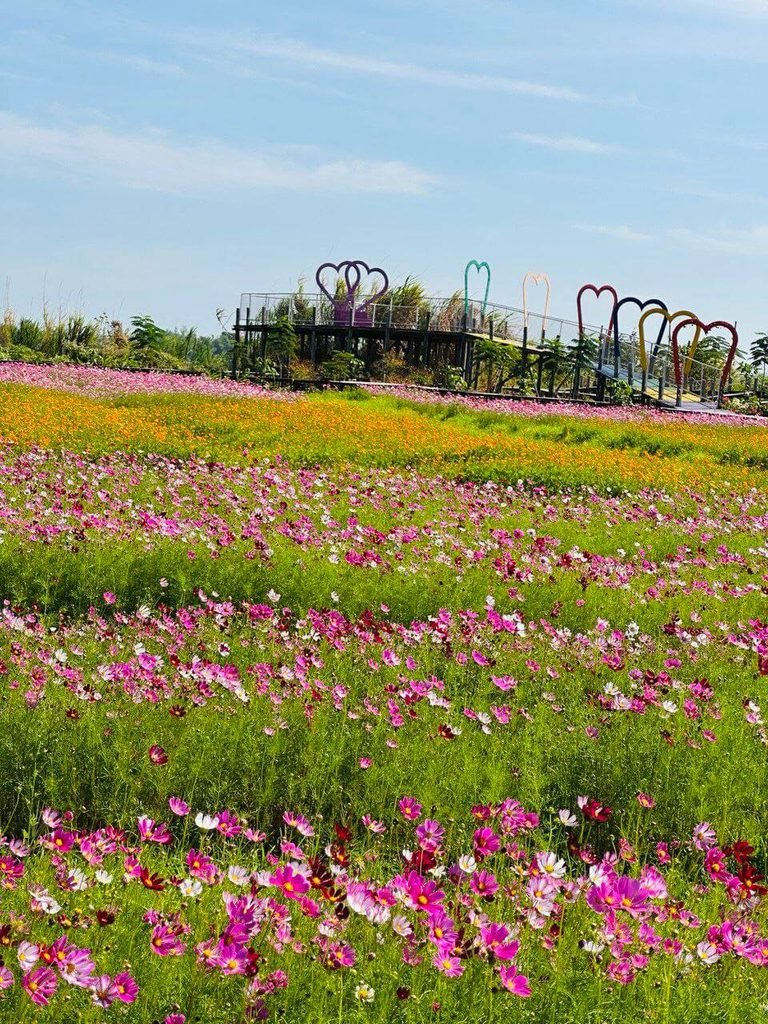
Best Fast-Blooming Flowers for Hot Climate Gardens
Sunflowers, marigolds, celosia, zinnias, and cosmos share two traits that make them work in our climate: they establish quickly, and they hold strong color even under intense heat.
That same speed is exactly why they need a rotation system instead of a single planting. Left in one round, the fast growth that makes them useful also means they burn out together, leaving the bare patches we saw in March 2024.
Navigating Wet and Dry Extremes: A Flower Planting Calendar
Effective seasonal garden business planning in a tropical climate means tackling two entirely different climate extremes, not one.
The dry season brings blistering heat that can incinerate delicate annuals in days. The wet season introduces a different threat entirely.
Tropical Flower Planting Calendar
| Season | Dominant Flowers | Main Challenge | How We Time Planting |
| Dry Season | Sunflowers, Marigolds, Celosia, Zinnias, Cosmos | Scorching heat causing fast blooms to burn out quickly. | Staggered zonal rotation; planting new seedling rows right next to peak blooms. |
| Rainy (Monsoon) Season | Rain-tolerant varieties (moving away from delicate annuals). | Heavy downpours leading to root rot and fertilizer burn. | Switching to a completely separate monsoon calendar; prioritizing drainage. |
| Transition Months | Mix of hardy cosmos and late-season marigolds. | Unpredictable weather shifts; sudden heavy rains followed by intense heat. | Overlapping the dry and wet calendars to ensure the soil is never left completely bare. |
How to Stop Root Rot in Flowers During Monsoon Season
In our first year, root rot and fertilizer burn during the wet season nearly wiped out our entire sunflower crop. That loss is what convinced us that a single planting calendar could never work here.
A dry-season schedule will instantly fail in the monsoon, and a monsoon schedule will instantly fail in the dry season. So we built two completely separate calendars—one for each extreme—rather than stretching one plan across both.
How Keeping a Flower Attraction Blooming Year-Round Paid Off
Once we adapted our planting cycles to these two distinct calendars, our visitor numbers rebounded within four months. Guests returned to enjoy the natural beauty and immersive floral scents surrounding our Tiny Homes.
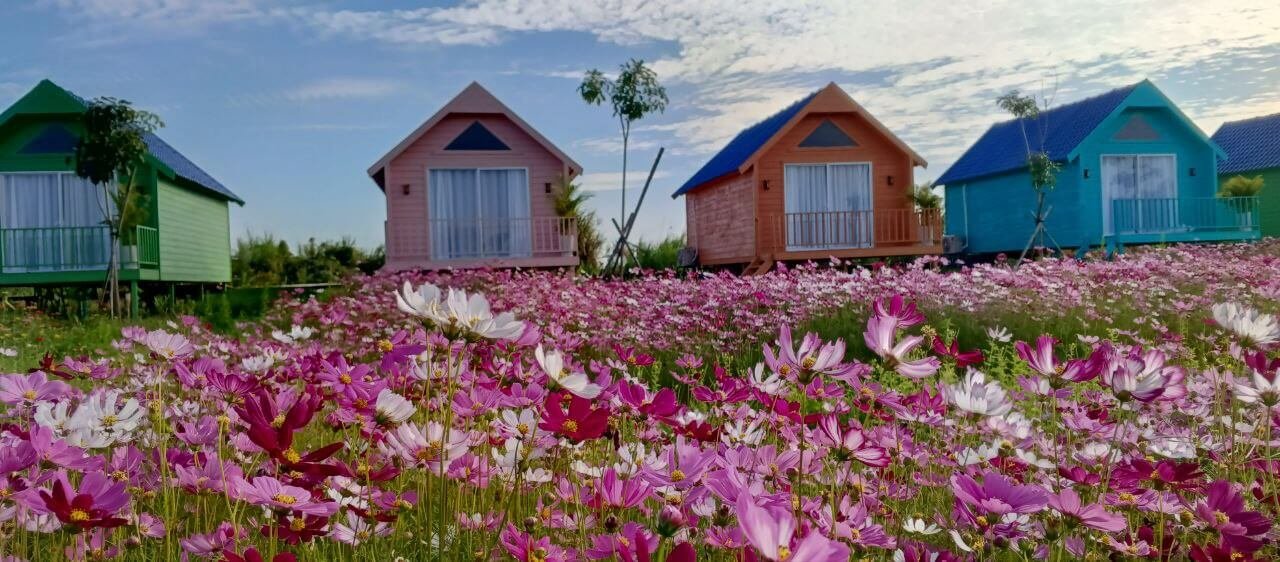
Guests now find the same thing we saw fixed: brightly painted Tiny Homes in green, pink, orange, and blue, framed by a field of cosmos rather than bare ground.
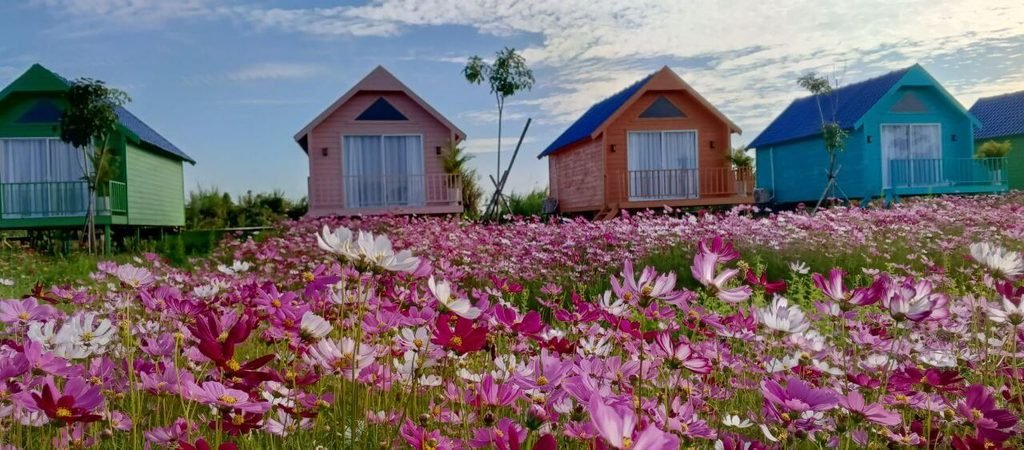
A garden is a living, breathing thing that constantly transforms. Anticipating those shifts, rather than being surprised by them, turned out to be the real secret to keeping the gates open and the landscape vibrant through every season.
Learning how to keep a flower attraction blooming year-round in a tropical climate was never about finding one perfect flower. It was about building a system that never lets the color stop moving.
Frequently Asked Questions
Why does a flower attraction lose visitors during dry season if the flowers are just dormant?
Dormant patches look the same to a paying guest whether the cause is natural or preventable. Once bare ground and dead blooms are visible, attendance drops before management even identifies the cause, which is what happened at Dream Garden in March 2024.
What is a staggered planting schedule and why does it matter for a flower business?
It means planting the same fast-blooming varieties across different zones on a rotation instead of all at once, so that as one zone fades, a neighboring zone reaches peak bloom. It matters because fast bloomers like cosmos and zinnias only hold color for a few weeks per round.
Which flowers hold up best in hot, humid tropical conditions?
Sunflowers, marigolds, celosia, zinnias, and cosmos have worked best for us because they establish quickly and keep vivid color even in intense heat, though their fast growth means they need rotation rather than a single planting.
How do you prevent root rot in flowers during heavy monsoon rain?
We stopped trying to run one planting calendar year round and built a separate wet season schedule after root rot and fertilizer burn nearly destroyed our entire sunflower crop in our first year.
How long does it take a flower attraction to recover once a rotation system is in place?
For us, adapting to two distinct dry season and wet season planting calendars brought visitor numbers back within four months.
