

Most articles about flower attraction business startup cost hand you a single bottom-line number and call it a day.
We can’t do that in good conscience, because we actually built our flower attraction business, Dream Garden, twice: once in 2019 and again in 2023, and the budgets for those two builds were drastically different.
Below is a detailed breakdown of the actual costs from both attempts, including the financial mistakes we made the first time around and the additional investments that made the relaunch work.
If you’re researching flower tourism startup costs or trying to put together your own flower attraction business budget, these are real numbers pulled from our own books, not industry guesses.
Key Takeaways
- Two Iterations: We built our flower attraction business, Dream Garden, twice: a 2019 launch that collapsed in 2021, and a successful 2023 relaunch.
- Budget vs. Time: Total startup costs roughly tripled between builds, but the second build took only half the time.
- The Real Killer: Cash flow mismanagement, not a lack of visitors, caused our first shutdown.
- Where the Money Went: Irrigation saw the biggest cost jump (4x), followed by garden structures (2.5x) and land prep (1.5x).
Flower Attraction Business vs. Flower Shop: Why the Cost Guides Don’t Match
Here’s why we’re sharing exact figures instead of vague estimates. Most online guides answering “how much does it cost to start a flower business” are actually written for flower shops—retail storefronts that sell cut flowers and bouquets.
That’s a fundamentally different business model from a flower attraction business.
Our core product is the experience of strolling through a flower field, not the flowers themselves. Since no one publicly shares exact financial figures for this business model, we used our two builds as a comprehensive case study, including our missteps.
Building Our Flower Attraction Business in 2019: The First Attempt
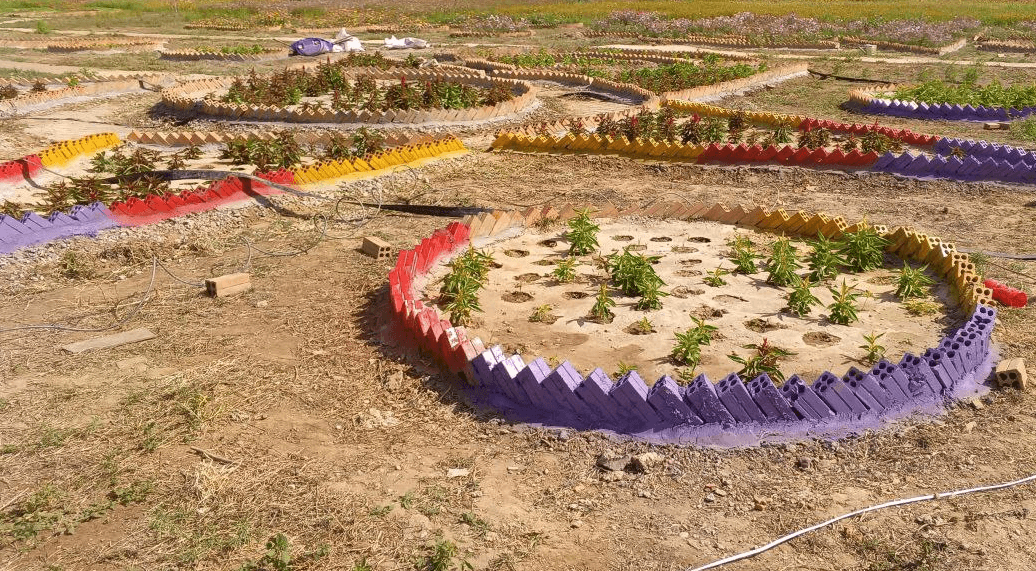
When we launched Dream Garden in mid-2019, our plan on paper was incredibly simple. Clear the land, plant the flowers, build a few basic structures, and open our doors to visitors.
We didn’t necessarily waste money. We were simply beginners operating on assumptions rather than experience, and that knowledge gap caught up with us in less than two years.
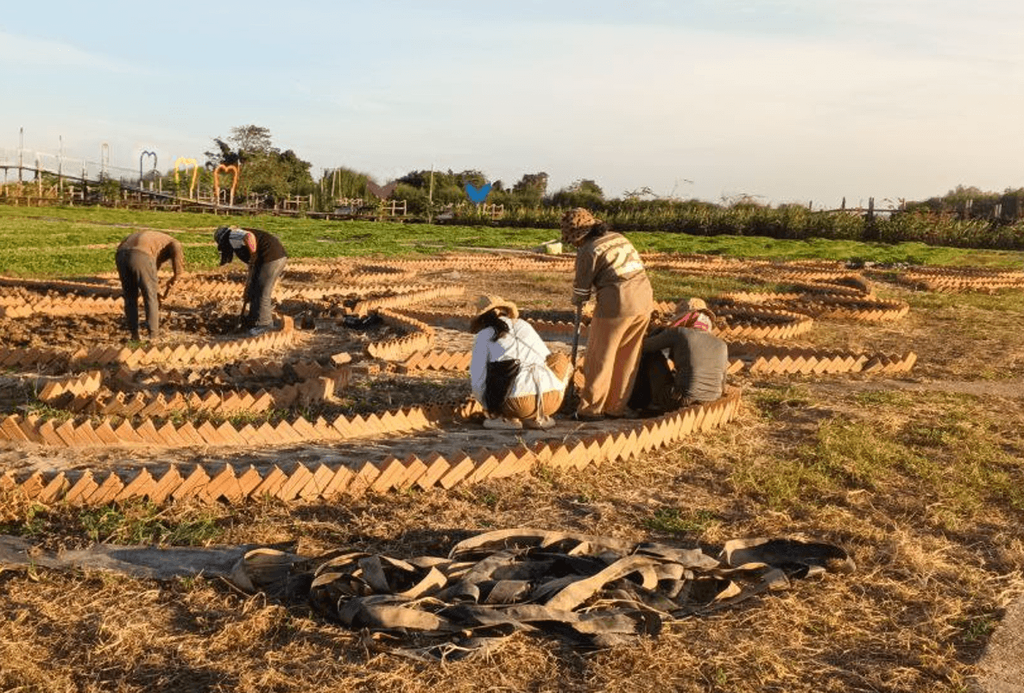
Watching a crew hand-lay the first garden bed borders back then, it was easy to underestimate how much groundwork a flower field like this actually needs before a single visitor walks through it.
The Fallout: Real Financial Mistakes That Sank the First Build
The true cause of our operational collapse in 2021 wasn’t a lack of visitors or a poor location. It was cash flow. A business can look bustling on the surface while quietly bleeding money underneath.
This single mistake is the primary reason our 2023 flower attraction business budget looks nothing like our 2019 one. We didn’t just spend more money on our second attempt. We finally spent it on the right things.
Flower Attraction Business Startup Cost Table: 2023 Relaunch Budget Breakdown
By the time we relaunched in 2023 with two partners, both our startup costs and projected revenue had roughly tripled compared to 2019.
Thanks to the hard-earned lessons from our first attempt, though, it took us only half the time to get the business up and running again.
To protect our internal company financials while still giving you exact strategic ratios, we’re using a baseline multiplier. Think of our 2019 total starting budget as roughly $20,600 (our “1x” baseline).
Here is exactly how that money shifted and multiplied when we relaunched in 2023.
| Cost Category | 2019 (First Attempt) | 2023 (Relaunch) | Reason for Shift |
| Land / Lease Prep | 40% of starting budget | 1.5x higher | Expanded physical footprint for scaling. |
| Irrigation System | 10% of starting budget | 4x higher | Upgraded to commercial PVC setup. |
| Garden Structures | 35% of starting budget | 2.5x higher | Paradise Bridge & stronger arches. |
| Glamping Addition | 0% (Did not exist yet) | New investment | Funded tent camping trial. |
| Marketing & Launch | 15% of starting budget | 2x higher | Targeted local attraction marketing. |
Flower Farm Irrigation System Cost: From Thin Pipes to a Commercial Setup
Irrigation saw the single biggest jump of any category, landing at 4x its 2019 share of the budget. In 2019, we ran on thin, undersized pipes that were never going to hold up to a full flower field at scale.
For 2023, we rebuilt the whole system around PVC, moving to a commercial-grade setup that could actually keep pace with the garden’s growth.
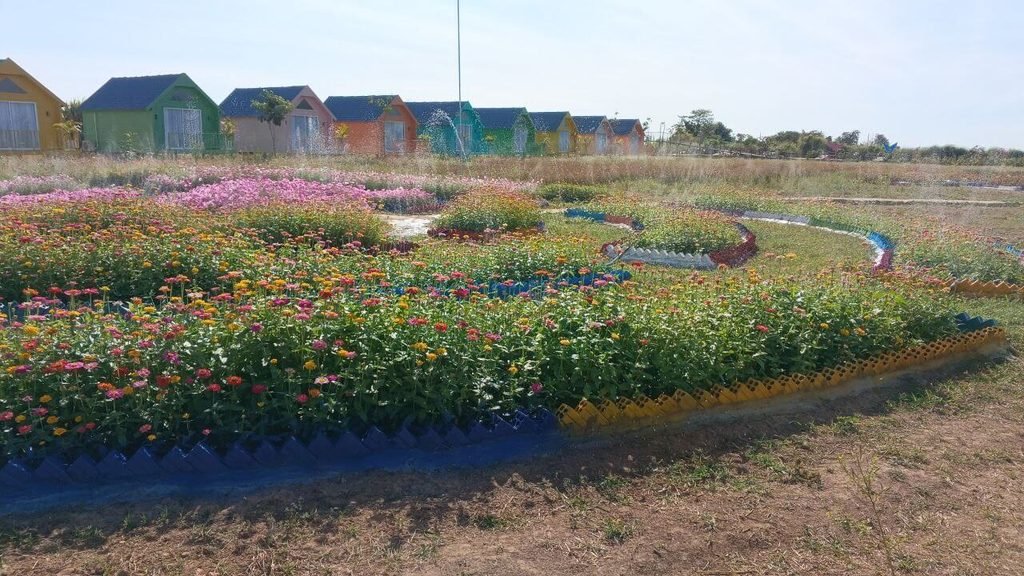
To give you a real-world anchor of what this means, just upgrading the mainline PVC valves and timer systems alone cost us an unexpected $1,200—a micro-cost we completely overlooked in our original 2019 spreadsheet.
If you’re weighing this flower farm irrigation system cost yourself, we broke down exactly how we approached it in our guide on How to Build a Budget-Friendly Irrigation System for Large Flower Fields, which is worth a read before you start budgeting for your own field.
Flower Farm Garden Structures Cost and the Paradise Bridge
Garden structures, meaning arches and walkways, took the next biggest jump at 2.5x. In 2019, this covered only minimal, basic builds.
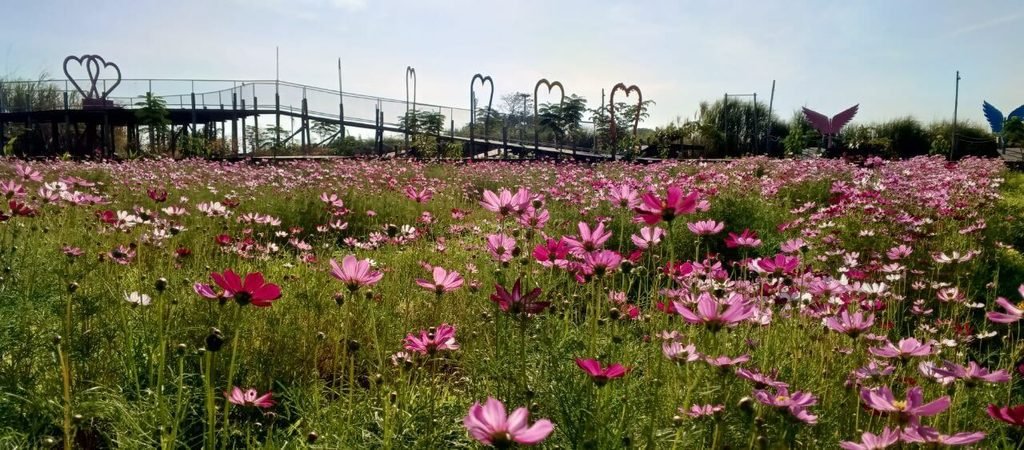
For the relaunch, this budget line funded the Paradise Bridge and sturdier arches built to handle real, consistent foot traffic without requiring constant maintenance.
Glamping Addition Farm Attraction Cost: Turning a Stopover Into a Destination
Glamping didn’t exist in our 2019 plan at all. For 2023, it became a brand-new line item that funded our tent camping trial, letting visitors stay overnight among the flowers instead of just walking through during the day.
To keep initial costs manageable without sacrificing the guest experience, we started small. Instead of building expensive permanent cabins right out of the gate, we invested in heavy-duty dome tents and basic off-grid amenities.
We strung up solar-powered lights to create a magical nighttime atmosphere that guests loved.
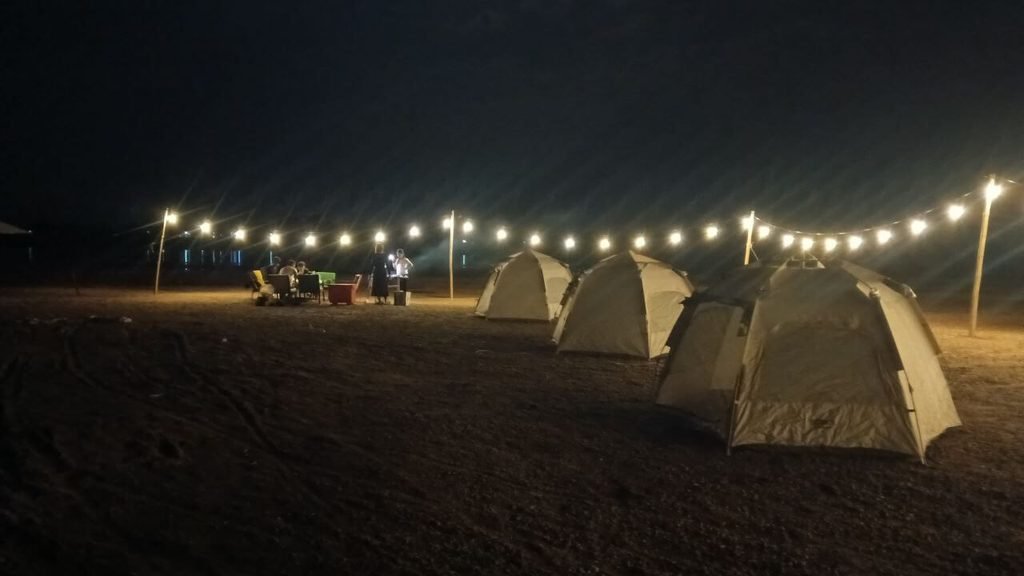
This required a modest budget for leveling the campsites, purchasing the tents, and securing the proper local permits for overnight guests.
The return on this specific investment was incredible. It completely changed the customer journey, transforming us from a brief one-hour stopover into a true weekend destination.
This allowed us to charge premium overnight rates and create a secondary revenue stream that we had completely missed out on during the 2019 build.
Flower Attraction Marketing Budget: What Changed Between Builds
Marketing and launch spend doubled for the relaunch. This time, our capital was aimed specifically at local attraction marketing rather than the broad, generic approach we tried in 2019.
Why Startup Costs Tripled, But We Built Faster the Second Time
Tripling a startup budget sounds like a major red flag. In our case, it was the exact opposite.
The 2019 iteration severely underfunded critical areas: a thin irrigation system, minimal physical structures, and a small initial planting scale, simply because we didn’t yet know which parts of the business actually required heavy investment.
Coming into 2023, we knew exactly where capital needed to be allocated. That meant we could invest heavily upfront in the correct infrastructure, rather than underfunding the project and being forced to fix expensive mistakes one by one later on. That’s also the exact reason our second build took only half the time.
We were no longer second-guessing decisions we had already navigated once before, and it’s the biggest lesson buried in our flower tourism startup cost numbers: what you invest in matters more than how much.
Flower Farm Business Cash Flow Mistakes We Won’t Repeat
Our 2019 shutdown wasn’t about visitor numbers or location. It came down to cash flow discipline—or the lack of it. A flower attraction business can look busy every weekend and still be losing money behind the scenes if spending isn’t tracked and sequenced correctly.
For example, in 2019, we rushed to spend a large portion of our budget on social media marketing and beautiful entrance signage before our main walking paths were fully stabilized with proper gravel.
When heavy rains hit opening month, our paths turned to mud. We had spent money attracting visitors who then had a poor experience, and the cash bled out on emergency mud-patching instead of growing the business.
That’s the single biggest flower farm business cash flow mistake we made, and it’s the reason the entire 2023 budget was built around spending correctly upfront rather than patching problems later.
Rebuilding a Failed Farm Business: How We’d Budget a Third Time
Each iteration of this business taught us lessons a spreadsheet never could. Our 2019 budget taught us what happens when you fail to properly plan for cash flow and sequencing.
Our 2023 budget taught us that spending more, but spending it correctly on long-term infrastructure, beats spending less and improvising later, every single time. If we were ever rebuilding a failed farm business again, that’s the one principle we wouldn’t negotiate on.
Final Thoughts on Flower Attraction Business Startup Cost
Two builds, three years apart, and a tripled budget taught us more about flower attraction business startup cost than any industry guide could.
The number that matters isn’t how much you spend. It’s whether that money goes toward irrigation, structures, and sequencing that hold up under real foot traffic and real weather.
Frequently Asked Questions
How much does it cost to start a flower attraction business?
There’s no single universal number because it depends on land size and existing infrastructure. In our case, total startup costs tripled between our 2019 launch and our 2023 relaunch, with irrigation, garden structures, and land prep as the three biggest categories.
What’s the biggest hidden cost in a flower farm irrigation system?
For us, it was the small stuff we didn’t budget for the first time around. Upgrading just the mainline PVC valves and timer systems for our commercial-grade setup cost an unexpected $1,200 that never appeared in our original 2019 spreadsheet.
Why do flower tourism businesses fail even with good visitor numbers?
In our experience, it’s rarely about visitors. Our 2019 shutdown came down to cash flow mismanagement, specifically spending on marketing and signage before our paths were stabilized, which turned into a mud problem the first time it rained heavily.
Is a glamping addition worth the cost for a flower attraction business?
For us, yes. Glamping didn’t exist in our 2019 budget at all, but adding a tent camping trial in 2023 turned Dream Garden from a brief daytime stopover into an overnight destination.
How long does it take to rebuild a flower attraction business after a shutdown?
Our 2023 relaunch took only half the time of our original 2019 build, even though the budget tripled, because we already knew where the capital needed to go instead of second-guessing decisions along the way.
